INITIALIZING
tech blog

Modernize SMB Infrastructure with Dell NativeEdge

SMBs can modernize infrastructure, boost productivity, and prep for AI with Dell NativeEdge. Learn how to simplify your IT operations.   ​  ​SMBs can modernize infrastructure, boost productivity, and prep for AI with Dell NativeEdge. Learn how to simplify your IT operations. NativeEdge Blog | Dell

tech blog

Maia 200: The AI accelerator built for inference

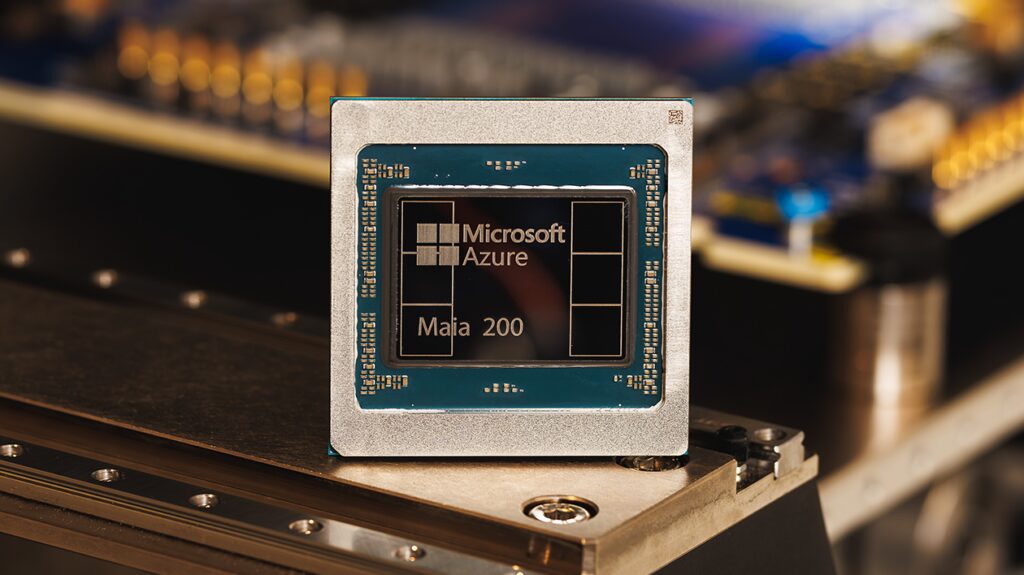
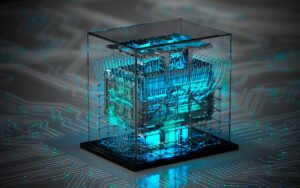
Today, we’re proud to introduce Maia 200, a breakthrough inference accelerator engineered to dramatically improve the economics of AI token generation. Maia 200 is an AI inference powerhouse: an accelerator built on TSMC’s 3nm process with native FP8/FP4 tensor cores, a redesigned memory system with 216GB HBM3e at 7 TB/s and 272MB of on-chip SRAM, plus data movement engines that keep massive models fed, fast and highly utilized. This makes Maia 200 the most performant, first-party silicon from any hyperscaler, with three times the FP4 performance of the third generation Amazon Trainium, and FP8 performance above Google’s seventh generation TPU. Maia 200 is also the most efficient inference system Microsoft has ever deployed, with 30% better performance per dollar than the latest generation hardware in our fleet today. Maia 200 is part of our heterogenous AI infrastructure and will serve multiple models, including the latest GPT-5.2 models from OpenAI, bringing performance per dollar advantage to Microsoft Foundry and Microsoft 365 Copilot. The Microsoft Superintelligence team will use Maia 200 for synthetic data generation and reinforcement learning to improve next-generation in-house models. For synthetic data pipeline use cases, Maia 200’s unique design helps accelerate the rate at which high-quality, domain-specific data can be generated and filtered, feeding downstream training with fresher, more targeted signals. Maia 200 is deployed in our US Central datacenter region near Des Moines, Iowa, with the US West 3 datacenter region near Phoenix, Arizona, coming next and future regions to follow. Maia 200 integrates seamlessly with Azure, and we are previewing the Maia SDK with a complete set of tools to build and optimize models for Maia 200. It includes a full set of capabilities, including PyTorch integration, a Triton compiler and optimized kernel library, and access to Maia’s low-level programming language. This gives developers fine-grained control when needed while enabling easy model porting across heterogeneous hardware accelerators. YouTube Video Click here to load media Engineered for AI inference Fabricated on TSMC’s cutting-edge 3-nanometer process, each Maia 200 chip contains over 140 billion transistors and is tailored for large-scale AI workloads while also delivering efficient performance per dollar. On both fronts, Maia 200 is built to excel. It is designed for the latest models using low-precision compute, with each Maia 200 chip delivering over 10 petaFLOPS in 4-bit precision (FP4) and over 5 petaFLOPS of 8-bit (FP8) performance, all within a 750W SoC TDP envelope. In practical terms, Maia 200 can effortlessly run today’s largest models, with plenty of headroom for even bigger models in the future. Crucially, FLOPS aren’t the only ingredient for faster AI. Feeding data is equally important. Maia 200 attacks this bottleneck with a redesigned memory subsystem. The Maia 200 memory subsystem is centered on narrow-precision datatypes, a specialized DMA engine, on-die SRAM and a specialized NoC fabric for high‑bandwidth data movement, increasing token throughput. Optimized AI systems At the systems level, Maia 200 introduces a novel, two-tier scale-up network design built on standard Ethernet. A custom transport layer and tightly integrated NIC unlocks performance, strong reliability and significant cost advantages without relying on proprietary fabrics. Each accelerator exposes: 2.8 TB/s of bidirectional, dedicated scaleup bandwidth Predictable, high-performance collective operations across clusters of up to 6,144 accelerators This architecture delivers scalable performance for dense inference clusters while reducing power usage and overall TCO across Azure’s global fleet. Within each tray, four Maia accelerators are fully connected with direct, non‑switched links, keeping high‑bandwidth communication local for optimal inference efficiency. The same communication protocols are used for intra-rack and inter-rack networking using the Maia AI transport protocol, enabling seamless scaling across nodes, racks and clusters of accelerators with minimal network hops. This unified fabric simplifies programming, improves workload flexibility and reduces stranded capacity while maintaining consistent performance and cost efficiency at cloud scale. A cloud-native development approach A core principle of Microsoft’s silicon development programs is to validate as much of the end-to-end system as possible ahead of final silicon availability. A sophisticated pre-silicon environment guided the Maia 200 architecture from its earliest stages, modeling the computation and communication patterns of LLMs with high fidelity. This early co-development environment enabled us to optimize silicon, networking and system software as a unified whole, long before first silicon. We also designed Maia 200 for fast, seamless availability in the datacenter from the beginning, building out early validation of some of the most complex system elements, including the backend network and our second-generation, closed loop, liquid cooling Heat Exchanger Unit. Native integration with the Azure control plane delivers security, telemetry, diagnostics and management capabilities at both the chip and rack levels, maximizing reliability and uptime for production-critical AI workloads. As a result of these investments, AI models were running on Maia 200 silicon within days of first packaged part arrival. Time from first silicon to first datacenter rack deployment was reduced to less than half that of comparable AI infrastructure programs. And this end-to-end approach, from chip to software to datacenter, translates directly into higher utilization, faster time to production and sustained improvements in performance per dollar and per watt at cloud scale. Sign up for the Maia SDK preview The era of large-scale AI is just beginning, and infrastructure will define what’s possible. Our Maia AI accelerator program is designed to be multi-generational. As we deploy Maia 200 across our global infrastructure, we are already designing for future generations and expect each generation will continually set new benchmarks for what’s possible and deliver ever better performance and efficiency for the most important AI workloads. Today, we’re inviting developers, AI startups and academics to begin exploring early model and workload optimization with the new Maia 200 software development kit (SDK). The SDK includes a Triton Compiler, support for PyTorch, low-level programming in NPL and a Maia simulator and cost calculator to optimize for efficiencies earlier in the code lifecycle. Sign up for the preview here. Get more photos, video and resources on our Maia 200 site and read more details. Scott Guthrie is responsible for hyperscale cloud computing solutions and services including Azure, Microsoft’s


tech blog

Dell PowerScale: Scaling With Confidence Amid Supply Constraints

Why flash-only platforms from VAST Data and Pure Storage are being tested by industry-wide supply constraints – and how Dell PowerScale is built to deliver.   ​  ​Why flash-only platforms from VAST Data and Pure Storage are being tested by industry-wide supply constraints – and how Dell PowerScale is built to deliver. Artificial Intelligence Blog | Dell

tech blog

Meet the Dell Education PC Portfolio

Dell Education PCs are not only built to endure the demands of the school day but are also designed to empower students, teachers and administrators to excel in their educational journeys.   ​  ​Dell Education PCs are not only built to endure the demands of the school day but are also designed to empower students, teachers and administrators to excel in their educational journeys. Launch Blog | Dell

tech blog

Dell Pro Plus or Pro Max: Match Your Workflow

Pro Plus vs. Pro Max: nearly identical on paper—until you look under the hood. CPU architecture reveals which is built for your workload.   ​  ​Pro Plus vs. Pro Max: nearly identical on paper—until you look under the hood. CPU architecture reveals which is built for your workload. Dell Pro Max Blog | Dell

tech blog

How Studios Scale Creativity with Modern Media Pipelines

As data volumes surge and teams collaborate across continents, media and entertainment studios are investing in infrastructure built for speed, resilience and secure access to keep production on schedule.   ​  ​As data volumes surge and teams collaborate across continents, media and entertainment studios are investing in infrastructure built for speed, resilience and secure access to keep production on schedule. Customer Blog | Dell

tech blog

Disney Animator Makes Feature Animations for $20M

Disney veteran Tom Bancroft proves feature animation can skip $100M budgets with a decentralized studio model.   ​  ​Disney veteran Tom Bancroft proves feature animation can skip $100M budgets with a decentralized studio model. Dell Pro Max Blog | Dell

tech blog

The Challenge of Protecting Brain Health Data

Privacy-first AI, faster research: Dell Pro Max workstations and NVIDIA RTX GPUs keep brain health data secure and accelerate discovery.   ​  ​Privacy-first AI, faster research: Dell Pro Max workstations and NVIDIA RTX GPUs keep brain health data secure and accelerate discovery. Healthcare Blog | Dell

tech blog

Resilience Debt: The Silent Risk Undermining Cyber Recovery

Resilience debt is growing silently—until it breaks recovery. Why confidence, not attacks, may be your biggest cyber risk.   ​  ​Resilience debt is growing silently—until it breaks recovery. Why confidence, not attacks, may be your biggest cyber risk. Cyber Resilience Blog | Dell

tech blog

Powering Progress: How Leaders Build on Dell Storage

Discover how organizations around the world are fueling innovation and efficiency with Dell’s storage solutions. See why they trust Dell to manage, protect and inspire progress with their most critical asset: data.   ​  ​Discover how organizations around the world are fueling innovation and efficiency with Dell’s storage solutions. See why they trust Dell to manage, protect and inspire progress with their most critical asset: data. PowerStore Blog | Dell

tech blog

PowerStore’s Latest Release: Smarter, Denser and More Secure

PowerStore’s latest release delivers more cost-efficient data density, more advanced cybersecurity, and streamlined file operations.   ​  ​PowerStore’s latest release delivers more cost-efficient data density, more advanced cybersecurity, and streamlined file operations. Launch Blog | Dell

tech blog

Star Kay White & Dell: A Sweet Recipe for Innovation

Discover how a 135-year-old creator of premium ice cream dessert ingredients—like flavor bases, delectable swirls and crunchy inclusions —stays ahead of the curve.   ​  ​Discover how a 135-year-old creator of premium ice cream dessert ingredients—like flavor bases, delectable swirls and crunchy inclusions —stays ahead of the curve. Data Center Blog | Dell

tech blog

Dell Pro Max with GB10 Powers Federal AI, Anywhere

Bring secure AI to the edge. Dell Pro Max with GB10 speeds Federal workloads with local processing and NVIDIA software.   ​  ​Bring secure AI to the edge. Dell Pro Max with GB10 speeds Federal workloads with local processing and NVIDIA software. Government Blog | Dell

tech blog

Announcing Open to Work: How to Get Ahead in the Age of AI

The work we do, and the way we do it, is always changing. Each of us has a memory of how we once did a task regularly, the tools we used and how both the task and the tools have since changed so much they are nearly unrecognizable. Because we are living and working in the “now,” change feels both personal and fast, so it is always worth remembering that this has happened before, maybe not in just this way or with this speed. And it is true. AI is rewriting work. How we do our jobs. How roles change. How careers are built. The skills we need. Some of that is exciting. Some of it can feel overwhelming. What we remember and have learned from previous times is that in moments like this, people are open to work and don’t just need new tools. They need a new mindset, a clearer understanding of what’s changing and a path forward. That’s why today we’re announcing Open to Work: How to Get Ahead in the Age of AI, LinkedIn’s first book, by CEO Ryan Roslansky and Chief Economic Opportunity Officer Aneesh Raman. The book explores how AI is reshaping work and what that shift means for the people navigating it every day. YouTube Video Click here to load media Microsoft and LinkedIn sit at the intersection of how work is done and how careers are built. We share a belief that the future of work will be driven by human creativity and ingenuity, not technology alone. When humans stay at the center, AI amplifies what people do best and creates new economic opportunity. Open to Work is grounded in that belief and focused on what’s happening now, not abstract predictions about the future. Ryan’s leadership at LinkedIn and as head of engineering for Microsoft 365 Copilot gives him a rare perspective on this moment. He sees how AI is built, how it shows up in everyday work and what it takes to adapt. Aneesh’s role gives him unique insight into how together we can use this moment of change to create economic opportunity for every member of the global workforce. The book is backed by real data — insights from experts, LinkedIn’s global network, Microsoft customers and the Work Trend Index. The goal isn’t hype. It’s clarity about how work is changing and how people can respond in practical, meaningful ways. For professionals, Open to Work is about agency — what you delegate to AI, what skills to deepen and how you stay relevant as roles evolve. For leaders, it’s about rethinking how work gets organized and cultivating a Frontier mindset: the conviction that the most important innovations happen at the edges, where uncertainty is highest and the opportunity to shape what comes next is greatest. And for Microsoft and LinkedIn employees, it’s a reminder of the responsibility we share to shape the future of work in a thoughtful, human-centered way. Open to Work publishes March 31 and is available for pre-order today. Frank X. Shaw is responsible for defining and managing communications strategies worldwide, company-wide storytelling, product PR, media and analyst relations, executive communications, employee communications, global agency management and military affairs. Top image: Aneesh Raman, left, LinkedIn chief economic opportunity officer, and Ryan Roslansky, LinkedIn CEO. Photo provided by LinkedIn. The post Announcing Open to Work: How to Get Ahead in the Age of AI appeared first on The Official Microsoft Blog. ​The work we do, and the way we do it, is always changing. Each of us has a memory of how we once did a task regularly, the tools we used and how both the task and the tools have since changed so much they are nearly unrecognizable. Because we are living and working in… The post Announcing Open to Work: How to Get Ahead in the Age of AI appeared first on The Official Microsoft Blog.  Featured, The Official Microsoft Blog, AI, LinkedIn, Microsoft 365 Copilot, Work Trend Index The Official Microsoft Blog

tech blog

Frontline Device Deployment: A Risk-Based Approach

Move beyond rugged claims—adopt a risk-based framework to ensure frontline devices deliver resilience where failure isn’t optional.   ​  ​Move beyond rugged claims—adopt a risk-based framework to ensure frontline devices deliver resilience where failure isn’t optional. Dell Pro Rugged Blog | Dell

Scroll to Top