What we’ve learned from Microsoft’s own AI transformation
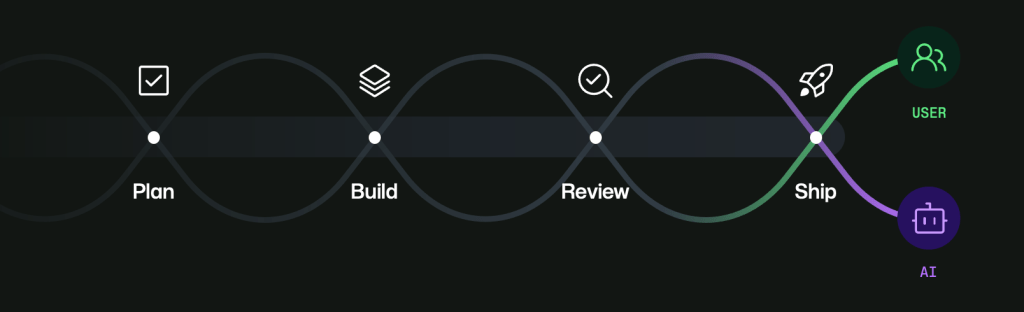
AI is reshaping work faster than any organization has fully mastered. Across industries, the conversation has shifted from what AI can do to how companies can use AI to create business value and expand what people are able to achieve. At Microsoft, we believe the organizations that succeed will be what we call Frontier Firms: human-led, but increasingly AI-enabled. That responsibility begins with how AI is built and continues through how it is put to work: AI should expand human capability while people retain meaningful control, judgment and accountability. We committed to being Customer Zero, learning through our own transformation so we could help others navigate their own. Our employees have experimented with AI, while leaders have set ambitious goals and challenged teams to reimagine how we work to achieve more than was possible before. We created cross-company councils spanning corporate functions, go-to-market and engineering to share best practices and learn together. We asked everyone to challenge their fixed mindsets and embrace the growth mindset we have cultivated for more than a decade. That work is producing measurable results: for a sales team deal close rates increased by 20%1; selected supply-chain workflows cut cycle time by up to 75%2; and a nine-person engineering team shipped an initial product release in 35 days.3 As proven approaches emerged, we codified them into case studies so we could accelerate transformation, scale what worked and learn from what did not. Just as importantly, we knew that if we wanted to help customers realize the full value of AI, we had to do the work to transform ourselves first. Our own first-hand experience needed to be a source of learning we could share with others. We have been sharing Microsoft’s Frontier Playbook with customers as a practical guide to our AI transformation journey, including what we’ve learned, what has worked so far and where we’ve grown from failures. Drawing on hundreds of AI transformation efforts across the company, the playbook captures what we are learning as we redesign work, build new capabilities, measure impact and help people grow alongside AI. The playbook also reflects important truths: transformation is hard, and learning is the durable superpower. Among the many insights gained from our successes and our failures, five lessons consistently stand out. 1. Start with the business outcome, not the technology We initially treated AI like a traditional technology rollout: deploy the tools, provide training, drive adoption. We learned that access and usage do not equal transformation: a tool licensed to over 200,000 people does not change how the work gets done. Early sales usage made this clear. Despite broad deployment, usage plateaued and impact did not materialize. Rather than push adoption harder, the team started from the business goals — deliver more value to customers, win deals and improve employee experience. They mapped how account managers spent their week and identified the best tools for the moments that mattered most: an Analyst agent for pipeline, a Deal agent for deal packages and Researcher for deep customer understanding. Weekly peer-led huddles turned experimentation into habit and scaled best practices to everyone on the team. Within the group, adoption of priority use cases tripled, revenue per account manager rose 9.4% and close rates were 20% higher.4 Success still required investment in helping people build new skills, experiment with new ways of working and learn from one another. But when leaders focused on a clear business outcome and what mattered most to the person doing the job, rather than AI adoption itself, conversations shifted from using AI to creating value. 2. Redesign the entire workflow, not just individual tasks One of our biggest lessons came from reimagining workflows end to end, not applying AI to existing steps. Early efforts helped people complete familiar tasks faster but rarely transformed outcomes. Adding agents to a broken process still leaves a broken process — speeding up one step just creates a longer queue at the next. Our cloud supply chain team simplified its processes before reimagining them with agents. Supply chain experts and engineers worked side by side, first mapping and simplifying end-to-end workflows, then created a single source of truth so every agent reasoned from the same data. With that foundation in place, they deployed more than 100 purpose-built agents across planning, sourcing, fulfillment and logistics. Those agents investigate shifts in demand and model capacity while comparing transportation options across air, land and sea on cost, timing and carbon impact — complexity few teams could manage alone. Cycle time fell by up to 75% in selected workflows. The shift isn’t only about speed, it’s about adding new value by improving what the team can see, anticipate and act on. Within defined permissions and approval thresholds, agents have progressed from answering questions to helping planners update or cancel purchase orders directly. Planners who once spent five to seven days tracing why a demand plan changed can now get an answer in hours, and sometimes in less than 20 minutes. That makes it possible to analyze changes as planning cycles unfold, model more scenarios, build better contingency plans and identify risks earlier — helping the team make better decisions and improve the performance of the supply chain.5 We are seeing the same shift in software engineering, where the opportunity extends beyond generating code faster to redesigning how teams plan, build, test and evaluate products with agents across the workflow. We’ve found the largest gains come when teams step back and redesign how work should flow across people, process and technology from start to finish — including what agents can access and do, how their actions are monitored and where people must review, approve or intervene. AI is most powerful when all three advance together. 3. Put employees at the center of transformation The people who do the work know where processes break down, where judgment matters and where AI could help — insights that no process map can fully capture. Their expertise needs to shape transformation from the start. Leaders are