Author name: ITMAITY

tech blog

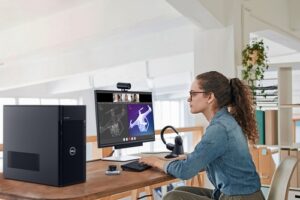
Bring the AI lab to your desk

Revolutionize your AI workflow—breakthrough tech, right at your desk. See how Dell is democratizing innovation.   ​  ​Revolutionize your AI workflow—breakthrough tech, right at your desk. See how Dell is democratizing innovation. Executive Voices Blog | Dell

tech blog

Microsoft at NVIDIA GTC: New solutions for Microsoft Foundry, Azure AI infrastructure and Physical AI

Microsoft combines accelerated computing with cloud scale engineering to bring advanced AI capabilities to our customers. For years, we’ve worked with NVIDIA to integrate hardware, software and infrastructure to power many of today’s most important AI breakthroughs. What’s new at NVIDIA GTC Expanded Microsoft Foundry capabilities to build, deploy and operate production-ready AI agents on NVIDIA accelerators and open NVIDIA Nemotron models New Azure AI infrastructure optimized for inference-heavy, reasoning-based workloads, including the first hyperscale cloud to power on next-generation NVIDIA Vera Rubin NVL72 systems Deeper integration across Microsoft Foundry, Microsoft Fabric and NVIDIA Omniverse libraries and open frameworks to support Physical AI systems from simulation to real‑world operations From Frontier models to production-ready agents At the foundation of this system is Microsoft Foundry: serving as the operating system for building, deploying and operating AI at enterprise scale. Foundry builds on Azure to bring together models, tools, data and observability into a single system designed for production agents. Today we’re expanding those capabilities across Foundry Agent Service and NVIDIA Nemotron models. The next-generation Foundry Agent Service and Observability in Foundry Control Plane are now generally available, enabling organizations to build and operate AI agents at production scale. Foundry Agent Service allows teams to quickly develop agents that reason, plan and act across tools, data and workflows. Once created, Foundry Control Plane provides the developer end-to-end visibility into agent behavior, unlocking both developer productivity as well as enterprise trust. Companies such as Corvus Energy are already using Foundry to replace manual inspection workflows with agent-driven operational intelligence across their global fleet. We are further simplifying the path from prototype to production with the availability of Voice Live API integration with Foundry Agent Service, in public preview, which enables developers to build voice-first, multimodal, real-time agentic experiences. This pairs with the general availability of a refreshed Microsoft Foundry portal and expanded integrations for Palo Alto Networks’ Prisma AIRS and Zenity, delivering deeper builder experiences and runtime security across the entire agent lifecycle. NVIDIA Nemotron models are also now available through Microsoft Foundry, joining the widest selection of models on any cloud, including the latest reasoning, frontier and open models. This bolsters our recent partnership announcement bringing Fireworks AI to Microsoft Foundry, enabling customers to fine-tune open-weight models like NVIDIA Nemotron into low-latency assets that can be distributed to the edge. Scaling AI infrastructure for the world’s most demanding workloads Inference AI workloads are reshaping cost, performance and system design requirements. To operationalize agentic AI at scale, customers need purpose-built infrastructure for inference‑heavy, reasoning‑based workloads that can be deployed and operated consistently across global and regulated environments. Microsoft’s AI infrastructure approach is engineered to seamlessly bring next-generation NVIDIA systems into Azure datacenters that are designed for power, cooling networking and rapid generational upgrades. This allows our customers to move with speed and agility and stay at the leading edge from generation to generation. In less than a year, we’ve deployed hundreds of thousands of liquid-cooled Grace Blackwell GPUs across our global datacenter footprint, and now we are excited to be the first hyperscale cloud to power on NVIDIA’s newest Vera Rubin NVL72 in our labs. Over the next few months, Vera Rubin NVL72 will be rolled out into our modern, liquid-cooled Azure datacenters. Microsoft’s infrastructure innovation with NVIDIA also extends to sovereign and regulated environments to give customers control of both where AI runs and how it evolves over time. Recently, we announced Foundry Local support for modern infrastructure and large AI models, and today we now have initial support for NVIDIA Vera Rubin platform on Azure Local, extending accelerated AI capabilities to customer-controlled environments. This approach allows organizations to plan for next-generation AI workloads, including reasoning-based and agentic systems, while maintaining Azure-consistent operations, governance and security through our unified software layer with Azure Arc and Foundry Local. YouTube Video Click here to load media Bringing AI into the physical world As AI moves beyond digital experiences, Microsoft and NVIDIA are collaborating to support the next wave of Physical AI. At GTC, this work centers on NVIDIA Physical AI Data Factory Blueprint, with Microsoft Foundry as the platform for hosting and operating Physical AI systems on Azure at cloud scale. By integrating this blueprint with Azure services as part of a Physical AI Toolchain, Microsoft enables developers to build, train and operate physical AI and robotics workflows that connect physical assets, simulation and cloud training environments into repeatable, enterprise-grade pipelines. To support, we are introducing a public Azure Physical AI Toolchain GitHub repository integrated with the Nvidia Physical AI Data Factory and with core Azure services. To further the impact of AI in real‑world, physical environments, today Microsoft and NVIDIA are deepening the integration between Microsoft Fabric and NVIDIA Omniverse libraries, connecting live operational data with physically accurate digital twins and simulation. This allows organizations to see what’s happening across their physical systems, understand it in real time and use AI to decide what to do next. In practice, customers in manufacturing and operations and beyond are using this approach to move beyond dashboards and alerts to coordinated, AI‑driven action across machines, facilities and workflows. From innovation to impact Microsoft is delivering reliable, production‑scale AI by bringing together its global AI infrastructure, platforms and real‑world systems with the latest innovation from NVIDIA. For customers, this means the ability to operate intelligence continuously, running inference-heavy, reasoning-based and physical AI workloads with the performance, security and governance required for real businesses and regulated industries. Whether powering always-on agents, scaling next-generation AI infrastructure or deploying intelligent systems in factories, energy facilities and sovereign environments, Microsoft and Nvidia are helping customers move faster from insight to action. Yina Arenas leads product strategy and execution for Microsoft Foundry, overseeing the end–to–end AI product portfolio, infrastructure, developer experiences and foundation model integration across OpenAI, Anthropic, Mistral, DeepSeek and others. She delivers an enterprise ready, production grade AI platform trusted by global customers for secure, reliable and scalable AI. The post Microsoft at NVIDIA GTC: New solutions for Microsoft Foundry, Azure AI infrastructure and Physical AI

tech blog

Announcing Copilot leadership update

Satya Nadella, Chairman and CEO, and Mustafa Suleyman, Executive Vice President and CEO of Microsoft AI, shared the below communications with Microsoft employees this morning. SATYA NADELLA MESSAGE I want to share two org changes we’re making to our Copilot org and superintelligence effort. It’s clear a new era of productivity is emerging as AI experiences rapidly evolve from answering questions and suggesting code, to executing multi-step tasks with clear user control points. You see this in our announcements over the last couple of weeks, like Copilot Tasks and Copilot Cowork, agentic capabilities in Office, and Agent 365. As these experiences connect more naturally across agents, apps, and workflows, we have an opportunity to help customers spend more time on higher-value work and reduce manual coordination, while providing people with more agency and empowerment and organizations with the governance and security controls they need. To that end, we are bringing the Copilot system across commercial and consumer together as one unified effort. This will span four connected pillars: Copilot experience, Copilot platform, Microsoft 365 apps, and AI models. This is how we move from a collection of great products to a truly integrated system, one that is simpler and more powerful for customers. Jacob Andreou will lead the Copilot experience across consumer and commercial, driving design, product, growth, and engineering, as EVP, Copilot, reporting to me. As CVP of Product and Growth at Microsoft AI, Jacob has accelerated our user-focused AI-first product making and growth framework. Prior to that, he was SVP at Snap, where he helped scale the company from its early days. Progress at the AI model layer is more critical than ever to our success as a company over the next decade and is foundational to everything we build above it. We are doubling down on our superintelligence mission with the talent and compute to build models that have real product impact, in terms of evals, COGS reduction, as well as advancing the frontier when it comes to meeting enterprise needs and achieving the next set of research breakthroughs. Mustafa Suleyman and I have been working towards this plan for some time, and he will continue to lead this high ambition work, reporting to me. Mustafa is uniquely qualified to drive this forward, with his deep focus and commitment to advancing the frontiers of model science, while also ensuring that human control, agency, and economic opportunity remain at the center of these advancements. Ryan Roslansky, Perry Clarke, and Charles Lamanna will lead M365 apps and the Copilot platform. Together, Jacob, Ryan, Charles, Perry, and Mustafa make up the Copilot LT and over the next few weeks they’ll work to align the teams. Our org boundaries will simply reflect system architecture and product shape such that we can deliver more coherent and competitive experiences that continue to evolve with model capabilities. And I am looking forward to how together we apply all of this to empower people, organizations, and the world. MUSTAFA SULEYMAN MESSAGE Subject: A new structure for Microsoft AI Technology and the future of our industry will be defined by two things: frontier models, and the products through which they are experienced. For some time, I’ve been thinking about how we best tackle these huge challenges, and today I’m excited to be evolving our structure at Microsoft AI, ensuring we’re positioned to succeed in both. I came to Microsoft with an overriding mission: to create Superintelligence that delivers a transformative, positive impact for millions of people. This requires us to build frontier models, at scale, pushing the boundaries of what’s possible. Everything else follows from this. It’s the foundation for our future as a company. With our ambitious, long-term frontier scale compute roadmap locked, we now have everything we need to build truly SOTA models. As you will have just heard from Satya, the next phase of this plan is to restructure our organization to enable me to focus all my energy on our Superintelligence efforts and be able to deliver world class models for Microsoft over the next 5 years. These models will enable us to build enterprise tuned lineages that help improve all our products across the company. They’ll also enable us to deliver the COGS efficiencies necessary to be able to serve AI workloads at the immense scale required in the coming years. Achieving all this will be a huge challenge, and I’m committing everything we have – and I have personally – to make it happen. To that end, I’ve been working hard with other leaders in the background for a while now to define a strategy to unify Copilot by bringing together the Consumer and Commercial efforts as one. We all know this makes sense. Every user – whether at home or at work – will be able to enjoy the full benefit of what we are all building. Today, we’re combining these organizations into a single, unified Copilot org. Jacob has demonstrated himself to be an outstanding leader for the product experience and clearly has the product instincts, the operational range, and the conviction to make Copilot a great success. Jacob will retain a dotted line to me, and I’ll stay directly involved in much of the day-to-day operation of MAI, attending Meetups, MMMs, LT, and supporting Jacob to drive all areas of product strategy. To ensure that the models we build and the products we ship are mutually reinforcing, we are establishing a Copilot Leadership Team that includes me, Jacob, Charles Lamanna, Perry Clarke, and Ryan Roslansky. This will enable us to focus our brand strategy, our product roadmap, our models and our core infrastructure as one to deliver the best experiences possible for all our users. Thank you for everything you’ve done over the last few years. I know how hard everyone has been pushing and the sacrifices many of you have made to help the company adapt to this new era. We really do have an incredible opportunity to redefine Microsoft for this agentic revolution. Mustafa’s mail

tech blog

Microsoft announces Experiences + Devices leadership changes

Rajesh Jha, Executive Vice President, Experiences + Devices, and Satya Nadella, Chairman and CEO, shared the below communications with Microsoft employees this morning. RAJESH JHA MESSAGE  Subject: Organizing for the future and my transition Dear Team, After 35+ years at Microsoft, I am moving into retirement. I will transition out on July 1st and then stay in an advisory role. Satya and I have been working on succession for some time. I am incredibly confident and excited about the future with Perry Clarke, Charles Lamanna, Pavan Davuluri, and Ryan Roslansky as EVP direct reports to Satya. I am also excited to announce the promotions of Jeff Teper to EVP, and Sumit Chauhan and Kirk Koenigsbauer to President. Please join me in congratulating these leaders on this well-deserved recognition. We’re announcing these top-level changes today, and between now and June, my leadership team and I will work together to finalize the full cascade of details needed in this kind of transition. This includes aligning operating rhythms, decision ownership, and details on the future org structure, all so we’ll be fully aligned and ready to run at the start of FY27. Our intent in taking this approach is to minimize changes and not lose the great momentum we have. Our priorities around SFI, QEI, and Copilot remain unchanged – let’s keep the intensity here. I want to add that working with you all over the years, in the service of customers, has been an incredible privilege for me. I am deeply grateful. Best regards, Rajesh SATYA NADELLA MESSAGE Rajesh has been a constant throughout my entire life at Microsoft. From our earliest days working together, I have admired his unwavering commitment to his team, to our customers, to the products we build, and to the company. I have always been struck by his operational rigor, his ability to make the hard strategic calls, lead through the grind, and emerge stronger on the other side. That, to me, is what true leadership looks like. When I think about the pantheon of leaders who have truly shaped this company, Rajesh stands firmly among them. He embodies the commitment that helped build and transform Microsoft into the company it is today, and it is on the strength of that foundation that we will continue to move forward.  And as we look to the future, the opportunity ahead is expansive. We have the depth of talent, the product ethos, and a clear sense of purpose as a company to ensure our technology advancements accrue to our mission of empowerment. Rajesh – I am deeply grateful for all you have done for Microsoft and our customers and for all you have taught me personally. On behalf of all of us – Thank You. Satya   The post Microsoft announces Experiences + Devices leadership changes appeared first on The Official Microsoft Blog. ​Rajesh Jha, Executive Vice President, Experiences + Devices, and Satya Nadella, Chairman and CEO, shared the below communications with Microsoft employees this morning. RAJESH JHA MESSAGE  Subject: Organizing for the future and my transition Dear Team, After 35+ years at Microsoft, I am moving into retirement. I will transition out on July 1st and then stay in an… The post Microsoft announces Experiences + Devices leadership changes appeared first on The Official Microsoft Blog.  Featured, The Official Microsoft Blog The Official Microsoft Blog

tech blog

Introducing the First Frontier Suite built on Intelligence + Trust

Today Microsoft is announcing: Wave 3 of Microsoft 365 Copilot Expanded model diversity with Claude and next-gen OpenAI models available today General availability of Agent 365 on May 1 for $15 per user General availability of the new Microsoft 365 E7: The Frontier Suite on May 1 for $99 per user Frontier Transformation is a holistic reimagining of business, aligning AI with human ambition to achieve an organization’s highest aspirations. It is the next evolution of AI Transformation — not only do we need to deliver efficiency and productivity, but we need to democratize intelligence and do more for humanity. Companies do not want or need more AI experimentation. They need AI that delivers real business outcomes and growth. In my daily conversations with customers and partners, they typically question what the most important components of an AI solution are. Is it the model? Is it silicon? At Microsoft, we believe the two most essential elements of Frontier Transformation are Intelligence + Trust. Organizations need to harness their own unique work intelligence as they build agents and solutions; and all AI artifacts across their technology stack must be observed, managed and secured to ensure they are delivering value responsibly.  Intelligence that shows up in real work  I often say that zero-shot artifact creation is nothing more than a parlor trick. Models can reason over data, produce draft documents, presentations and spreadsheets, but they do not understand work. Real differentiation comes from intelligence — deep work context, embedded in the tools people already use. AI should amplify your intelligence but do so in a manner that protects your differentiation and unique value. Work IQ amplifies an individual’s IQ by tapping into your organization’s IQ. It is the intelligence layer that enables Microsoft 365 Copilot and agents to know how you work, with whom you work, and the content upon which you collaborate. That is why Copilot is faster, more accurate and more trusted than solutions built on models and connectors alone. This month, we are unleashing Work IQ with our next generation of agentic experiences in Wave 3 of Microsoft 365 Copilot in Word, Excel, PowerPoint and Outlook. Employees will have an enhanced chat experience in Copilot with the ability to create and augment artifacts, and the power to build their own agents within the canvas they work in every day. Microsoft 365 Copilot is model diverse by design. Rather than betting on a single model, we built a system that makes every model useful at work. Customers get the choice, performance and flexibility in an open, heterogenous environment.  Copilot leverages leading models from OpenAI and Anthropic, operating openly across clouds and data services without locking customers in. Claude is now available in mainline chat in Copilot via the Frontier program, alongside the latest generation of OpenAI models. Microsoft 365 Copilot Wave 3 is not just a singular release of new capabilities but rather a commitment to continuous innovation. We will bring frontier capabilities with enterprise promises for our customers in an open and model diverse manner. Another great example of this is Copilot Cowork, which is in research preview. Built in close collaboration with Anthropic, we are bringing the technology that powers Claude Cowork into Microsoft 365 Copilot to enable long-running, multi-step work that unfolds over time.  Click here to learn about our Wave 3 news in more detail. These announcements come as our customers across industries are already seeing the value of Microsoft 365 Copilot. Microsoft recently delivered its strongest quarter yet with Copilot, with paid seats growing more than 160% year over year and daily active usage up ten times, as customers increasingly make Copilot a core part of everyday work. Expansion is also accelerating as the number of customers deploying Copilot at significant scale — more than 35,000 seats — tripled year over year. Just last week, Mercedes Benz announced a global rollout of Microsoft 365 Copilot, following recent investments from NASA, Fiserv, ING, the University of Kentucky, the University of Manchester, the U.S. Department of the Interior and Westpac. This is in addition to the 90 percent of the Fortune 500 who now use Copilot. Trust: from agent experimentation and sprawl to enterprise control  The speed of agent development and proliferation tells us customers see value, but without guardrails the pace of adoption turns into blind spots, diminished ROI and real security risk. As AI agents become more capable and autonomous, trust is nonnegotiable. IDC predicts 1.3B agents in circulation by 2028, and 80% of the Fortune 500 are already using Microsoft agents, led by operationally complex industries like manufacturing, financial services and retail. That is why I am excited to announce the May 1 general availability of Microsoft Agent 365, the control-plane for AI agents. Priced at $15 per user, Agent 365 gives IT and security leaders a single place to observe, govern, manage and secure agents across the organization — using the same infrastructure, applications and protections they rely on to manage people today. We are seeing tremendous momentum with our preview customers. In just two months, tens of millions of agents have appeared in the Agent 365 Registry. We have tens of thousands of customers that are already adopting Agent 365 to securely govern and scale AI agents across enterprise workflows. At Microsoft, we are also using Agent 365 as Customer Zero and the early signals are clear. We now have visibility into more than 500,000 agents across the company with the most widely used focused on research, coding, sales intelligence, customer triage and HR self-service. That adoption is translating into real work. Over the past 28 days alone, agents have been generating more than 65,000 responses every day for employees. This is evidence that we are not simply experimenting, we are embedding agents in the flow of everyday work and empowering human ambition. Introducing the Frontier Suite To meet this demand, I am thrilled to announce we are bringing Intelligence + Trust together with Microsoft 365 E7: The Frontier Suite. Microsoft 365 E7 unifies Microsoft 365 E5, Microsoft 365 Copilot and Agent 365 into a single solution powered by Work IQ and integrated with the apps and security stack customers already rely on. It includes Microsoft Entra Suite and advanced Defender, Intune and Purview

tech blog

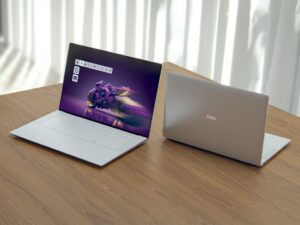
Performance Redefined with New Dell Pro Max Laptops

We’re in a dynamic era where technology serves as both the tool and the canvas for ideas and innovation. Available …   ​  ​We’re in a dynamic era where technology serves as both the tool and the canvas for ideas and innovation. Available … Dell Pro Max Blog | Dell

tech blog

Red Hat OpenShift Now Available on Dell AI Factory with NVIDIA

Unleash AI’s potential with Red Hat OpenShift on Dell AI Factory, backed by NVIDIA, for scalable and secure enterprise solutions.   ​  ​Unleash AI’s potential with Red Hat OpenShift on Dell AI Factory, backed by NVIDIA, for scalable and secure enterprise solutions. AI Solutions Blog | Dell

tech blog

Five Insights for Smarter Enterprise AI Adoption

Learn how enterprises are tackling AI challenges, scaling smarter solutions and unlocking insights to transform business strategies and results.   ​  ​Learn how enterprises are tackling AI challenges, scaling smarter solutions and unlocking insights to transform business strategies and results. AI Accelerators Blog | Dell

tech blog

Maximize Resources and Drive AI Outcomes at Scale

Achieve up to 5x GPU utilization, streamline AI operations, and scale confidently with Dell AI Factory featuring NVIDIA and Run:ai solutions.   ​  ​Achieve up to 5x GPU utilization, streamline AI operations, and scale confidently with Dell AI Factory featuring NVIDIA and Run:ai solutions. AI Solutions Blog | Dell

tech blog

AI Challenges and Opportunities: Expert Tips for Success

Unlock AI’s potential with Dell’s expert services. Overcome challenges, maximize ROI and drive outcomes with tailored solutions.   ​  ​Unlock AI’s potential with Dell’s expert services. Overcome challenges, maximize ROI and drive outcomes with tailored solutions. AI Services Blog | Dell

tech blog

Meet the Next Wave of Dell’s Flagship Laptops

Dell unveils the new Dell 16 Premium and Dell 14 Premium, delivering performance advancements to meet the needs of students, creators and entrepreneurs.   ​  ​Dell unveils the new Dell 16 Premium and Dell 14 Premium, delivering performance advancements to meet the needs of students, creators and entrepreneurs. Dell Premium Blog | Dell

tech blog

Dell AI Factory with NVIDIA Powers Enterprise Agentic AI

Organizations can now leverage new AI abilities with Dell AI Factory with NVIDIA and NeMo Microservices, to boost productivity.   ​  ​Organizations can now leverage new AI abilities with Dell AI Factory with NVIDIA and NeMo Microservices, to boost productivity. AI Solutions Blog | Dell

tech blog

Telstra and Dell Technologies Advance AI-Driven Telco Cloud Automation

Dell showcases agentic AI capability for sovereign, AI-native telecom cloud infrastructure, setting a new standard for AI-native network operations.   ​  ​Dell showcases agentic AI capability for sovereign, AI-native telecom cloud infrastructure, setting a new standard for AI-native network operations. Telecommunications Blog | Dell

tech blog

AI PC, Copilot+ PC or AI Workstation? The Differences That Matter

AI is reshaping the endpoint, but the jargon hasn’t kept up. This guide cuts through the noise and explains how AI PCs, Copilot+ PCs and AI workstations differ so IT can plan with intent.   ​  ​AI is reshaping the endpoint, but the jargon hasn’t kept up. This guide cuts through the noise and explains how AI PCs, Copilot+ PCs and AI workstations differ so IT can plan with intent. Dell Ambassadors Blog | Dell

Scroll to Top