tech blog

Inside the world’s most powerful AI datacenter

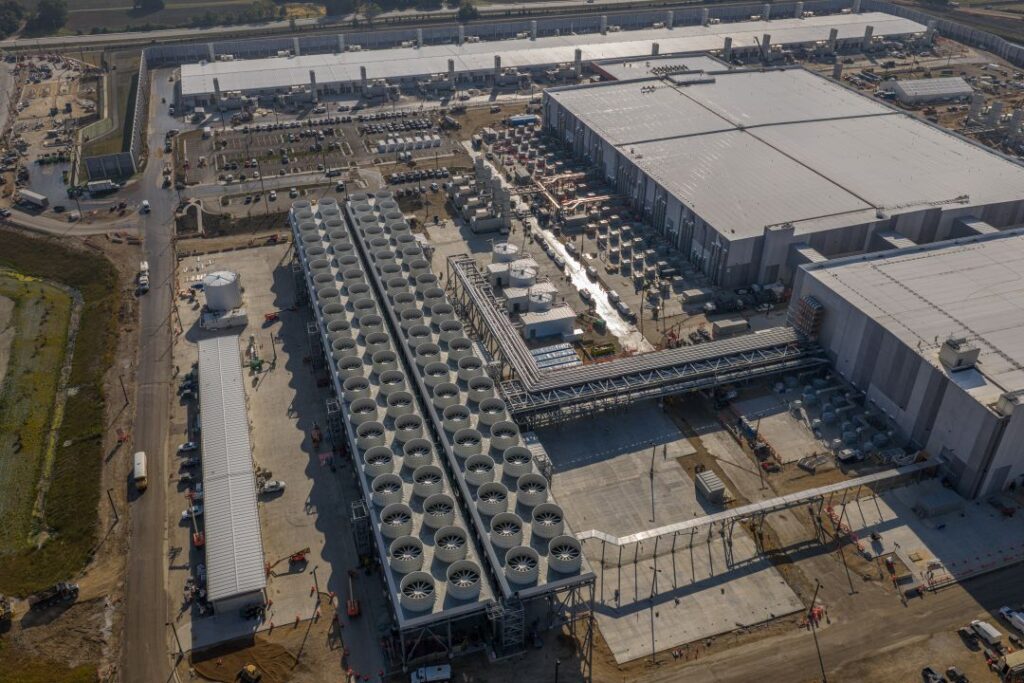
This week we have introduced a wave of purpose-built datacenters and infrastructure investments we are making around the world to support the global adoption of cutting-edge AI workloads and cloud services. Today in Wisconsin we introduced Fairwater, our newest US AI datacenter, the largest and most sophisticated AI factory we’ve built yet. In addition to our Fairwater datacenter in Wisconsin, we also have multiple identical Fairwater datacenters under construction in other locations across the US. In Narvik, Norway, Microsoft announced plans with nScale and Aker JV to develop a new hyperscale AI datacenter. In Loughton, UK, we announced a partnership with nScale to build the UK’s largest supercomputer to support services in the UK. These AI datacenters are significant capital projects, representing tens of billions of dollars of investments and hundreds of thousands of cutting-edge AI chips, and will seamlessly connect with our global Microsoft Cloud of over 400 datacenters in 70 regions around the world. Through innovation that can enable us to link these AI datacenters in a distributed network, we multiply the efficiency and compute in an exponential way to further democratize access to AI services globally. So what is an AI datacenter? The AI datacenter: the new factory of the AI era Aerial view of Microsoft’s new AI datacenter campus in Mt Pleasant, Wisconsin. An AI datacenter is a unique, purpose-built facility designed specifically for AI training as well as running large-scale artificial intelligence models and applications. Microsoft’s AI datacenters power OpenAI, Microsoft AI, our Copilot capabilities and many more leading AI workloads. The new Fairwater AI datacenter in Wisconsin stands as a remarkable feat of engineering, covering 315 acres and housing three massive buildings with a combined 1.2 million square feet under roofs. Constructing this facility required 46.6 miles of deep foundation piles, 26.5 million pounds of structural steel, 120 miles of medium-voltage underground cable and 72.6 miles of mechanical piping. Unlike typical cloud datacenters, which are optimized to run many smaller, independent workloads such as hosting websites, email or business applications, this datacenter is built to work as one massive AI supercomputer using a single flat networking interconnecting hundreds of thousands of the latest NVIDIA GPUs. In fact, it will deliver 10X the performance of the world’s fastest supercomputer today, enabling AI training and inference workloads at a level never before seen. The role of our AI datacenters – powering frontier AI Effective AI models rely on thousands of computers working together, powered by GPUs, or specialized AI accelerators, to process massive concurrent mathematical computations. They’re interconnected with extremely fast networks so they can share results instantly, and all of this is supported by enormous storage systems that hold the data (like text, images or video) broken down into tokens, the small units of information the AI learns from. The goal is to keep these chips busy all the time, because if the data or the network can’t keep up, everything slows down. The AI training itself is a cycle: the AI processes tokens in sequence, makes predictions about the next one, checks them against the right answers and adjusts itself. This repeats trillions of times until the system gets better at whatever it’s being trained to do. Think of it like a professional football team’s practice. Each GPU is a player running a drill, the tokens are the plays being executed step by step, and the network is the coaching staff, shouting instructions and keeping everyone in sync. The team repeats plays over and over, correcting mistakes until they can execute them perfectly. By the end, the AI model, like the team, has mastered its strategy and is ready to perform under real game conditions. AI infrastructure at frontier scale Purpose-built infrastructure is critical to being able to power AI efficiently. To compute the token math at this trillion-parameter scale of leading AI models, the core of the AI datacenter is made up of dedicated AI accelerators (such as GPUs) mounted on server boards alongside CPUs, memory and storage. A single server hosts multiple GPU accelerators, connected for high-bandwidth communication. These servers are then installed into a rack, with top-of-rack (ToR) switches providing low-latency networking between them. Every rack in the datacenter is interconnected, creating a tightly coupled cluster. From the outside, this architecture looks like many independent servers, but at scale it functions as a single supercomputer where hundreds of thousands of accelerators can train a single model in parallel. This datacenter runs a single, massive cluster of interconnected NVIDIA GB200 servers and millions of compute cores and exabytes of storage, all engineered for the most demanding AI workloads. Azure was the first cloud provider to bring online the NVIDIA GB200 server, rack and full datacenter clusters. Each rack packs 72 NVIDIA Blackwell GPUs, tied together in a single NVLink domain that delivers 1.8 terabytes of GPU-to-GPU bandwidth and gives every GPU access to 14 terabytes of pooled memory. Rather than behaving like dozens of separate chips, the rack operates as a single, giant accelerator, capable of processing an astonishing 865,000 tokens per second, the highest throughput of any cloud platform available today. The Norway and UK AI datacenters will use similar clusters, and take advantage of NVIDIAs next AI chip design (GB300) which offers even more pooled memory per rack. The challenge in establishing supercomputing scale, particularly as AI training requirements continue to require breakthrough scales of computing, is getting the networking topology just right. To ensure low latency communication across multiple layers in a cloud environment, Microsoft needed to extend performance beyond a single rack. For the latest NVIDIA GB200 and GB300 deployments globally, at the rack level these GPUs communicate over NVLink and NVSwitch at terabytes per second, collapsing memory and bandwidth barriers. Then to connect across multiple racks into a pod, Azure uses both InfiniBand and Ethernet fabrics that deliver 800 Gbps, in a full fat tree non-blocking architecture to ensure that every GPU can talk to every other GPU at full line rate without congestion. And across


tech blog

Dell: Securing the Future of Agentic Payments

Discover why Dell supports the new Agentic Payments Protocol (AP2) and how open standards are building an interoperable future for AI-driven commerce.   ​  ​Discover why Dell supports the new Agentic Payments Protocol (AP2) and how open standards are building an interoperable future for AI-driven commerce. Agentic AI Blog | Dell

tech blog

The AI Energy Challenge: What CIOs Need to Know

AI’s biggest challenge isn’t data or algorithms, it’s energy. Here’s what CIOs need to know about the AI energy challenge.   ​  ​AI’s biggest challenge isn’t data or algorithms, it’s energy. Here’s what CIOs need to know about the AI energy challenge. AI Solutions Blog | Dell

tech blog

PowerEdge XE7740 with Gaudi 3 breaks barriers to enterprise AI accessibility

Discover the Dell PowerEdge XE7740 with Intel Gaudi 3 PCIe accelerators, offering scalable AI acceleration and seamless integration into existing infrastructures with robust cost efficiency.   ​  ​Discover the Dell PowerEdge XE7740 with Intel Gaudi 3 PCIe accelerators, offering scalable AI acceleration and seamless integration into existing infrastructures with robust cost efficiency. PowerEdge Blog | Dell

tech blog

AJ Wedding: Reinventing the Stage (Literally) One Pixel at a Time

AJ Wedding of Orbital Studios empowers filmmakers with tech that’s faster, smarter, and creative-first. Reinventing Hollywood, one pixel at a time.   ​  ​AJ Wedding of Orbital Studios empowers filmmakers with tech that’s faster, smarter, and creative-first. Reinventing Hollywood, one pixel at a time. PowerScale Blog | Dell

tech blog

Microsoft leads shift beyond data unification to organization, delivering next-gen AI readiness with new Microsoft Fabric capabilities

We’re in a hinge moment for AI. The experiments are over and the real work has begun. Centralizing data, once the finish line, is now the starting point. The definition of “AI readiness” is evolving as increasingly sophisticated agents demand rich, contextualized data grounded in business operations to deliver meaningful results. What sets leaders apart is the quality of the data platform experience in delivering on the shared meaning, live context and interactivity that helps systems understand the business as it is, not just as a static report. Across industries, frontier firms are dissolving silos and equipping teams with AI agents and reasoning systems that go beyond answers to help people build, explore, decide and act. The result: a new rhythm of work that’s faster, more connected, more explainable and closer to the customer. Microsoft Fabric: Powering AI‑Ready data innovation enterprise‑wide at FabCon Europe As the first hyperscaler to fully embrace this paradigm, Microsoft is introducing new capabilities in its fastest-growing data and analytics platform, Microsoft Fabric, at the European Microsoft Fabric Community Conference (FabCon). With Fabric, we are bringing together all of an organization’s data into a single, AI‑ready foundation so every team can turn data into actionable insight with the full context of their business. At FabCon, Microsoft is announcing a major leap forward in its delivery of AI data readiness with Graph in Fabric, a low/no-code platform for modeling and analyzing relationships across enterprise data; and Maps in Fabric, which joins the recently launched digital twin builder in Microsoft Fabric as part of Real-Time Intelligence and brings geospatial analytics into Fabric, enabling users to visualize and enrich location-based data at scale. We’re also expanding Fabric’s capabilities further with new OneLake shortcuts and mirroring sources, a Graph database connecting entities across OneLake, enhanced developer experiences and new security controls — providing everything needed to run mission-critical scenarios on Fabric. These capabilities mark a fundamental evolution in data strategy for business leaders scaling intelligent AI applications and agents across their organizations. Train smarter agents with Graph and Maps The foundation of every successful AI agent isn’t just data — it’s organized knowledge. As businesses accelerate into the AI era, the challenge isn’t gathering more information, but structuring it so agents can reason, connect and act with purpose. The previews of Graph and Maps in Fabric are designed to help businesses organize their raw data for real-world impact. Graph in Fabric draws on the graph design principles proven at LinkedIn to reveal connections across customers, partners and supply chains, enabling organizations to visualize and query relationships that drive business outcomes. Maps in Fabric brings geospatial analytics, empowering teams to make location-aware decisions as they respond to operational challenges in real time. But these aren’t just technical milestones, they’re strategic tools for business leaders. AI is sparking new cross-company collaboration by connecting enterprise data — uniting business functions, accelerating decisions and empowering teams to share and scale value through open data flow. Whether it’s mapping supply chain dependencies or visualizing customer journeys, Graph and Maps help businesses move from isolated data points to a connected, actionable foundation for AI. Discover how Graph and Maps in Fabric unlock real-time intelligence for AI-driven operations. Get the engineering inside scoop from Corporate Vice President of Messaging and Real-Time Analytics, Yitzhak Kesselman, in his latest blog: “The Foundation for Powering AI-Driven Operations.” Enhancing developer experiences across Fabric to accelerate AI projects Fabric is quickly becoming the go-to platform for data developers worldwide. To fuel that momentum, we’re rolling out new tools that make it easier to build, automate and innovate. The new Fabric Extensibility Toolkit simplifies architecture and automation — so every solution is secure, scalable and aligned to business needs. And with the preview of Fabric Model Context Protocol (MCP) developers can tap into AI-assisted code generation and item authoring right inside familiar environments like Visual Studio Code and GitHub Codespaces. These updates aren’t just for software developers. They’re for any business leader ready to turn organized data into competitive advantage. Fabric helps teams move from experimentation to enterprise-scale impact, with speed and governance built in. OneLake: The AI-Ready data foundation OneLake is the unified data lake at the heart of Fabric. It’s designed to ingest data once and make it instantly usable across analytics, AI and applications to accelerate insight. Today, we’re introducing new features to give teams unprecedented visibility and control with OneLake. With the addition of mirroring capabilities for Oracle and Google BigQuery, expanded support for data agents and OneLake shortcuts to Azure Blob Storage, organizations can bring all their data together, no matter where it lives. OneLake shortcut transformations can now convert JSON and Parquet files to Delta tables for instant analysis. OneLake also offers secure governance tools, including a new Secure tab in the catalog for managing permissions and a Govern tab for data oversight. We’re also releasing the Azure AI Search integration with OneLake. By making this available in the Azure AI Foundry portal, we’re streamlining the experience for developers and data teams, helping them build smarter, more context-aware agents faster. Our OneLake Table API preview allows apps to discover and inspect tables using Fabric’s security model, and OneLake diagnostics, enabling workspace owners to capture all data activity and storage operations. Microsoft Fabric and Azure AI Foundry: A complete data, AI and agent ecosystem In the AI era, every project is a data project, and success depends on reducing complexity. Microsoft is addressing this head-on by continuing to natively integrate Fabric and Azure AI Foundry together to help simplify how enterprises design, customize and manage AI apps and agents. Fabric provides a single way to reason over data wherever it resides, delivering the structured, contextualized foundation AI needs. On top of that foundation, Azure AI Foundry enables developers to work with their favorite tools, including GitHub, Visual Studio and Copilot Studio, to efficiently build and scale AI applications and agents, while giving IT leaders visibility into performance, governance and ROI. By bringing data, models and operations together,

tech blog

Transforming Mobile Core Networks with Dell and Intel

Discover how Dell PowerEdge servers with Intel Xeon 6 CPUs are transforming mobile core networks with efficiency and scalability.   ​  ​Discover how Dell PowerEdge servers with Intel Xeon 6 CPUs are transforming mobile core networks with efficiency and scalability. Telecommunications Blog | Dell

tech blog

The Founder of Arcitecta Talks Metadata in the Age of AI

Why metadata still matters in the age of AI: Jason Lohrey on real-time systems, human-centered design, and the future of data management.   ​  ​Why metadata still matters in the age of AI: Jason Lohrey on real-time systems, human-centered design, and the future of data management. AI Solutions Blog | Dell

tech blog

How the Miami Dolphins Quietly Future-Proofed Game Day

Missing the action & stuck in long security lines? Not in Miami. See how the Dolphins’ Dell-powered Hard Rock Stadium makes NFL Sundays as relaxed as possible.   ​  ​Missing the action & stuck in long security lines? Not in Miami. See how the Dolphins’ Dell-powered Hard Rock Stadium makes NFL Sundays as relaxed as possible. Customer Blog | Dell

tech blog

Dell ThinOS: Future-Ready, Budget-Friendly, Eco-Conscious

Maximize ROI and sustainability by deploying ThinOS 10 on Dell and non-Dell devices, extending hardware lifecycles and reducing costs.   ​  ​Maximize ROI and sustainability by deploying ThinOS 10 on Dell and non-Dell devices, extending hardware lifecycles and reducing costs. Sustainability Blog | Dell

tech blog

Redefining Entertainment: AI & Advanced Workflows

Discover how Agentic AI can run securely, privately, and on-premises – powered by the Dell Pro Max with GB10.   ​  ​Discover how Agentic AI can run securely, privately, and on-premises – powered by the Dell Pro Max with GB10. Artificial Intelligence Blog | Dell

tech blog

A joint statement from Microsoft and OpenAI

Microsoft and OpenAI have signed a non-binding memorandum of understanding (MOU) for the next phase of our partnership. We are actively working to finalize contractual terms in a definitive agreement. Together, we remain focused on delivering the best AI tools for everyone, grounded in our shared commitment to safety. The post A joint statement from Microsoft and OpenAI appeared first on The Official Microsoft Blog. ​Microsoft and OpenAI have signed a non-binding memorandum of understanding (MOU) for the next phase of our partnership. We are actively working to finalize contractual terms in a definitive agreement. Together, we remain focused on delivering the best AI tools for everyone, grounded in our shared commitment to safety. The post A joint statement from Microsoft and OpenAI appeared first on The Official Microsoft Blog.  Featured, The Official Microsoft Blog, AI The Official Microsoft Blog

tech blog

Impact Starts with Community at the Core

From AI hubs to digital skills programs, we’re partnering with cities, schools and nonprofits to empower communities. See how we are driving digital inclusion and creating new opportunities.   ​  ​From AI hubs to digital skills programs, we’re partnering with cities, schools and nonprofits to empower communities. See how we are driving digital inclusion and creating new opportunities. AI Solutions Blog | Dell

tech blog

Empowering Telecom Partners with Dell PowerEdge R470 Certification

Certify your telecom solution on Dell PowerEdge R470 17G server: built for 5G, edge, and cloud-native agility. Power your network forward.   ​  ​Certify your telecom solution on Dell PowerEdge R470 17G server: built for 5G, edge, and cloud-native agility. Power your network forward. Telecommunications Blog | Dell

tech blog

Flexible work update

Amy Coleman, Executive Vice President and Chief People Officer, shared the below communication with Microsoft employees this morning. How we work has forever changed. I remember starting at Microsoft in the late ‘90s, always in the office, no laptops, and primarily working with the people right down the hall. As technology evolved and our business expanded, we became more open, more global, and able to scale in ways we couldn’t have imagined. Then the pandemic reshaped everything. It pushed us to think differently about work, to connect like never before (thank you Teams!), reminded us of how much we value being together, and gave us focus and autonomy in the traditional workday. We’re not going back, and we shouldn’t. Instead, we should take the best of what we’ve learned and move forward. In the AI era, we are moving faster than ever, building world-class technology that changes how people live and work, and how organizations everywhere operate. If you reflect on our history, the most meaningful breakthroughs happen when we build on each other’s ideas together, in real time. We’ve looked at how our teams work best, and the data is clear: when people work together in person more often, they thrive — they are more energized, empowered, and they deliver stronger results. As we build the AI products that will define this era, we need the kind of energy and momentum that comes from smart people working side by side, solving challenging problems together. With that in mind, we’re updating our flexible work expectations to three days a week in the office. We’ll roll this out in three phases: 1) starting in Puget Sound at the end of February; 2) expanding to other US locations; 3) then launching outside the US. Our goal with this change is to provide more clarity and consistency in how we come together, while maintaining the flexibility we know you value. We want you to continue to shape your schedule in ways that work best for you, making in-person time intentional and impactful. Importantly, this update is not about reducing headcount. It’s about working together in a way that enables us to meet our customers’ needs. For some of you, this is not a change. For others this may be a bigger adjustment, which is exactly why we’re providing time to plan thoughtfully. As part of these updates, we’re also enhancing our workplace safety and security measures so we can continue to provide a workplace where every employee can do their best work. What you need to know: Puget Sound-area employees: If you live within 50 miles of a Microsoft office, you’ll be expected to work onsite three days a week by the end of February 2026. You’ll receive a personalized email today with more details. Please connect with your manager and team to understand your organization’s plans. If needed, you can request an exception by Friday, September 19. Managers: You’ll find actions to take, and the resources to support both you and your team on the Managers@Microsoft SharePoint. All employees: You’ll hear from your EVP or organizational leadership today with specific guidance. Each business will do what is best for their team, which means some groups will deviate from our company-wide expectations. If you are outside of the Puget Sound area, you do not need to take any action at this time unless your EVP communicates otherwise. Timelines and details for additional US office locations will be announced soon. For employees outside the United States, we will begin planning in 2026. More information is available on the Flexible Work at Microsoft SharePoint. As always, we’ll keep learning together to ensure Microsoft is the best place for you to grow and have a great career. Let’s keep moving forward together. Thank you, Amy   The post Flexible work update appeared first on The Official Microsoft Blog. ​Amy Coleman, Executive Vice President and Chief People Officer, shared the below communication with Microsoft employees this morning. How we work has forever changed. I remember starting at Microsoft in the late ‘90s, always in the office, no laptops, and primarily working with the people right down the hall. As technology evolved and our business expanded, we became… The post Flexible work update appeared first on The Official Microsoft Blog.  Featured, The Official Microsoft Blog The Official Microsoft Blog

Scroll to Top