Professional Digital Marketing Course by ITMAITY: Your Gateway to a Successful Digital Career
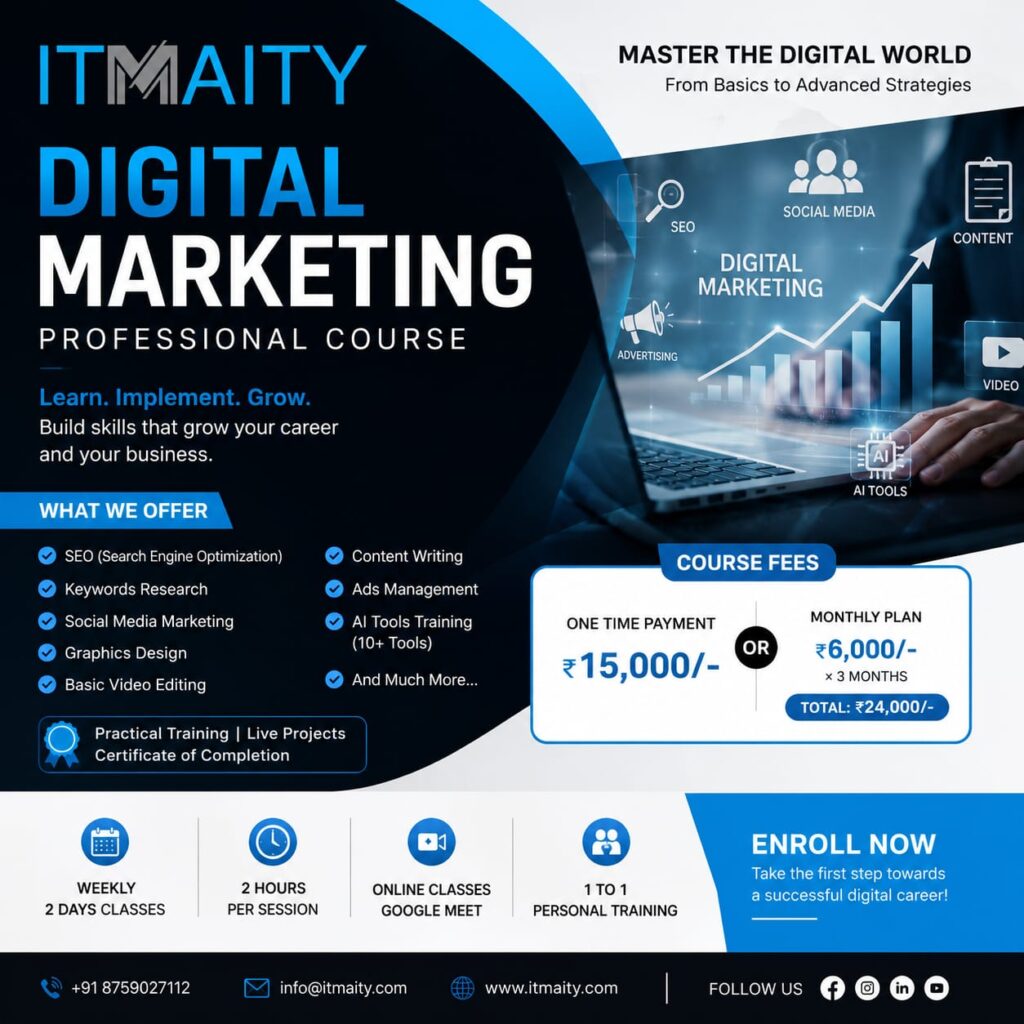
In today’s digital-first world, businesses rely heavily on online marketing to reach customers, build brands, and drive growth. As a result, skilled digital marketers are in high demand across industries. If you’re looking to build a rewarding career, grow your business, or start freelancing, ITMAITY’s Professional Digital Marketing Course is designed specifically for you. Why Choose ITMAITY? At ITMAITY, we believe in practical, industry-focused learning that prepares students for real-world challenges. Our training is delivered by experienced professionals who bring hands-on expertise and proven marketing strategies directly into the classroom. Whether you’re a student, entrepreneur, freelancer, or job seeker, this course provides the knowledge and skills needed to thrive in the digital marketing landscape. What You’ll Learn Our comprehensive curriculum covers the most in-demand digital marketing skills: Search Engine Optimization (SEO) Learn how to improve website rankings, increase organic traffic, and optimize content for search engines. Keyword Research Master the techniques used to identify profitable keywords that drive targeted traffic and conversions. Social Media Marketing Discover how to grow brands and engage audiences across platforms like Facebook, Instagram, LinkedIn, and YouTube. Graphics Design Create attractive visual content for social media campaigns, advertisements, and brand promotion. Basic Video Editing Learn essential video editing techniques to produce engaging content for digital platforms. Content Writing Develop compelling content that attracts, informs, and converts customers. Ads Management Understand how to create, manage, and optimize paid advertising campaigns for maximum ROI. AI Tools Training Get hands-on experience with 10+ powerful AI tools that enhance productivity, content creation, marketing automation, and business growth. Business Branding & Marketing Strategy Learn how successful brands build authority, attract customers, and scale their businesses through effective marketing strategies. Flexible Learning Structure ITMAITY offers personalized learning to ensure every student receives individual attention. Training Details This flexible format allows working professionals, students, and business owners to learn at their own pace while receiving expert guidance. Course Fees One-Time Payment ₹15,000/- Monthly Payment Option ₹6,000/- per month for 3 monthsTotal: ₹24,000/- Choose the payment option that best fits your budget and learning goals. Who Should Join? This course is ideal for: ✅ Students seeking career opportunities in digital marketing✅ Business Owners looking to grow their online presence✅ Freelancers wanting to expand their service offerings✅ Job Seekers aiming to acquire high-demand skills✅ Professionals planning a career transition into digital marketing Career Opportunities After Completion After completing the course, participants can pursue careers such as: Learn, Implement & Grow with ITMAITY Digital marketing is one of the fastest-growing career fields in the world. With practical training, personalized mentorship, and industry-relevant skills, ITMAITY empowers learners to achieve professional success and business growth. Contact ITMAITY 🌐 Website: www.itmaity.com📧 Email: info@itmaity.com📞 Contact: +91 8759027112 Take the first step toward a successful digital marketing career with ITMAITY today. Learn, Implement & Grow! 🚀